Kilimanjaro News Network
The Voice of Africa
UMOJA
NA MAENDELEO

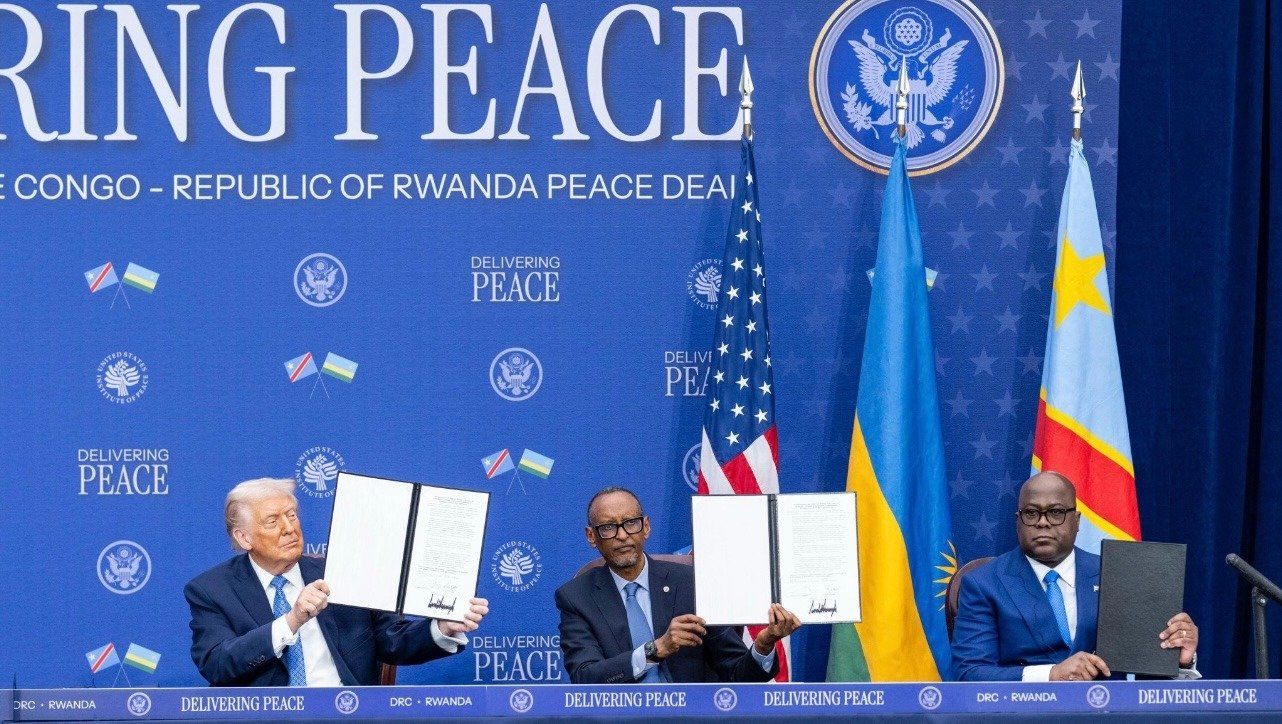
The announcement of the “Washington Accord” a U.S.-brokered peace and critical minerals agreement between the Democratic Republic of Congo and Rwanda should, by all rights, be a moment for unreserved celebration. The suffering in the eastern DRC is one of the world’s most enduring and devastating humanitarian crises. Yet, the ceremonial backdrop of Washington D.C., thousands of miles from the conflict zone, casts a long, unsettling shadow over the continent’s diplomatic maturity and the future control of its prized resources.
The fundamental question that African citizens must ask their leaders is this: Why?
Why, after tireless efforts were expended through African-led platforms the Luanda Process, the Nairobi Process, and the constant diplomacy of the African Union (AU) did the Presidents of the DRC and Rwanda feel compelled to seek final affirmation in the halls of a foreign capital? The existence of these regional and continental mechanisms, designed to foster “African solutions to African problems,” were systematically relegated in favour of external mediation backed by a major world power.
The symbolism of this trip is profound, and profoundly damaging. It sends an unmistakable signal of failure back to Kinshasa, Kigali, Addis Ababa, and the headquarters of every regional economic bloc. When African presidents, including the Chair of the AU Commission, travel to the seat of an external power to validate a peace deal, it suggests that only non-African states possess the leverage, the “carrots and sticks,” necessary to enforce commitment among African neighbours. This retreat from diplomatic autonomy is a crisis of agency that drags the entire continent backward.
Peace in Exchange for Minerals?
The most corrosive aspect of the Washington Accord is its explicit and unapologetic linkage between regional security and access to critical minerals, specifically for U.S. investors. This dynamic immediately fuels the long-held suspicion that Western interest is not rooted in altruistic peacebuilding but in geopolitical and economic self-interest.
The Price of Peace and the Crisis of African Agency: Why the Washington Accord is a Diplomatic Retreat
When a brokering party whose leader has previously shown open disdain for African nations makes clear that the agreement “opens a gateway” to tremendous wealth for American companies, the suspicion that the deal is a “peace agreement in exchange for prized minerals” is tragically validated. While DRC officials have insisted the accord upholds their sovereignty over resource exploitation, the mechanism of co-development and integration with a foreign power introduces a layer of dependency and vulnerability that continental efforts sought to avoid.
African leaders must recognise the pattern of “divide and rule” that often accompanies foreign intervention in resource-rich regions. By signing a pact that explicitly ties stability to mineral trade, they appear to be institutionalising the very economic dependencies that have historically fuelled the conflict.
The presidents Félix Tshisekedi and Paul Kagame who signed this document, and the African dignitaries who witnessed it, are now faced with a heavy burden of responsibility. They must prove that the short-term benefit of a brokered pause in hostilities was not purchased at the long-term cost of African dignity and control over its own economic destiny. They must demonstrate that the robust, inclusive, and sovereignty-respecting frameworks championed by African bodies were not merely bypassed but rendered irrelevant by a superior, profit-driven diplomatic force.
Africa’s problems will not be truly solved until African leaders commit, fully and without exception, to solving them on African soil, under African auspices, and for African benefit. Anything less is a diplomatic surrender.
What, precisely, is being signed in Washington that could not be signed in Kinshasa, Kigali, or anywhere else on African soil? The grim, unspoken truth hangs in the air: this is less about peace for the people and more about terms for the minerals. It is a rearrangement of the chessboard by a foreign power that views our leaders not as partners, but as proxies and clients. The deal likely comes with invisible strings strings tied to defence contracts, economic policy, and, most crucially, privileged access to the very mineral wealth that is the root of so much suffering.
These leaders are not just failing their people; they are dragging the entire African project backwards. They are validating every stereotype of African incapacity. They are telling the world, and more devastatingly, telling their own citizens, that Africa cannot manage its own affairs, that our conflicts are too complex for our own minds, that our peace must be stamped with a foreign seal of approval.
This is a profound and unforgivable abdication of sovereignty. It is a betrayal of every Pan-Africanist who fought for self-determination. While they posture in Washington, mothers bury children in Goma and farmers flee violence in Rubavu. Their peace is not being crafted; it is being commodified. They are trading agency for applause, and in doing so, they are selling the future of the continent piece by piece, mineral by mineral, to the highest (and most familiar) bidder.
Africa does not need peace deals signed in the halls of its historical oppressors. It needs leaders with the courage, the vision, and the unshakeable pride to face each other at home, under an African sky, and build a future that belongs to Africans. Until that day, these Washington pilgrimages will remain nothing more than a modern-day scramble, with our own presidents holding the map.